Ever had a content idea you just knew would make major waves for your business?
You sit and spend hours writing a great blog post about it and hit publish, all while imagining the leads and revenue that your brilliant, thoughtful creation will generate for your business.
Then, months pass by, and the blog you created has contributed nothing to your bottom line.
Many businesses (including us) have made this mistake.
The main culprit?
Pursuing ideas with low topical relevance.
Topical relevance for SEO is more important than ever, especially with the emergence of AI-generated responses by Google and answer engines like ChatGPT.
We’ll explain what topical relevance is in this post, showing real client examples from our 15+ years of experience as a digital marketing agency, before giving you the simple test you can do before every piece of content to ensure the scenario outlined in this intro doesn’t happen to you.
What Is Topical Relevance for SEO?
Simply put, topical relevance for SEO is how closely a content idea relates to what you actually sell.
It goes beyond keywords to cover the overarching concepts that you write about.
There can be a certain subjectivity with topical relevance. Some businesses assume a topic is relevant to their business until the results come in, and nobody has converted into a customer.
The best way to think of topical relevance is like this:
- Would the person reading your post ever hire you?
- Would the blog be a resource for either your team or a potential client?
If you can’t answer one of those questions with a definitive “yes”, then it is not topically relevant enough to pursue.
It’s surprisingly easy to drift off topic, and most businesses don’t realize it’s happening. We’ll give you a few examples.
How Businesses Drift Off Topic (Real Examples)
There are two distinct ways that a blog can fail the topical relevance test. Type 1 is simply content that isn’t relevant to your business at all. Let’s look at an example of type 1, before covering type 2.
Example 1: Roofing Company
After completing a blog audit for a roofing company we worked with, we found something interesting.
They had a blog driving a lot of traffic to their site called “Best Rooftop Bars in Columbus.”
We understood why they thought this was on topic, but it wasn’t attracting the traffic they wanted.
The word “roof” is in there, but that doesn’t matter. Who searches for rooftop bars and then calls a roofer? We recommended that they redirect the blog to a more topically relevant page.
For the next three examples, we will cover type 2 for how blogs fail the topical relevance test. Type 2 is trickier and more dangerous than type 1.
This is content that seems relevant (and actually might be generating tons of views) but attracts the wrong audience, making it harder to catch because the posts seem like they’re working.
Example 2: Our Topical Relevance Mistake
For The Media Captain, we had a blog on the site called “How Many Times Should I Post on Instagram Per Day.”
Yes, we do social media marketing, and this was also one of the most trafficked blogs on our site, but it wasn’t bringing in the right kind of traffic.
This didn’t drive any business for us and was bringing in traffic that wasn’t relevant for us. We ultimately decided to redirect it.
Example 3: Our Topical Relevance Mistake Pt. 2
Another example from us. We had a blog on our site about what to do when an ex-employee has ownership of a Meta Business Profile.
We got a TON of traffic to the site about this blog, and in fact, tons of people reached out to us to hire us to help them in this situation.
This type of situation is complicated, and in most cases, we weren’t able to help.
We ended up redirecting the blog because it was taking our staff a lot of time to work with these clients, and it wasn’t resulting in the kind of business we wanted.
Example 4: Law Firm
A law firm client of ours has a blog on their site called, What to Do When Your Lawyer Isn’t Fighting For You, which is about legal malpractice.
This was the most visited page on their site, even above their homepage, yet it was driving the wrong traffic.

We decided to rewrite the blog to address the following:
- The old blog reads like generic attorney dissatisfaction content that could apply to any practice area (divorce, DUI, family law), with vague examples that don’t establish case value thresholds or the catastrophic outcomes the firm actually handles.
- The new blog immediately establishes we’re talking about legal malpractice that costs you a significant personal injury or malpractice settlement (think: attorney missed statute of limitations on your $2M truck accident case). We included Ohio-specific legal malpractice requirements to give it local applicability and explicitly stated what types of attorney failures they don’t handle.
Tip: If you decide to rewrite the topic, keep the same URL of the existing post. This preserves the SEO equity the URL has built while refreshing the content itself. You can copy and paste the URL into Google Search Console’s URL inspection tool and request indexing to have Google crawl the new content more quickly.

The “But It’s Kind of Related” Trap
You’ll notice from the examples above that all of the blog topics were at least somewhat related to the products/services sold by the companies.
The truth is, these topics were only relevant at a surface level.
We’ll put it like this: topical relevance is not necessarily about the topic. It’s about the reader.
- Who are you writing for?
- Would they ever become a customer?
While it’s a flashy metric, your traffic numbers mean very little if not followed by conversions.
There’s another piece of the topical relevance puzzle that is more internal than external.
For every page on our website, we make sure that it not only answers questions for potential clients, but that it’s also something our sales or operations team can use as a resource.
Tip: Gather up your customer care team and have them tell you what questions they get asked frequently. These are not only great blog posts for SEO (since online users are likely asking similar questions – you can verify this with keyword research tools like Semrush), but also for your team to send to customers/potential clients for a more in-depth answer.
The Simple Topical Relevance Test for Every Piece of Content
Before pursuing your next content idea, ask yourself:
Is this a resource for my team or a potential customer?
If the answer is no, it doesn’t belong on your site. Simple as that.
Remember: every piece of content should have a purpose. Don’t guess. Use the topical relevance test, along with search data and direct customer feedback, to inform your content strategy.
What Topically Relevant Content Actually Looks Like
Let’s say you’re looking to build topically relevant content for a roofing company.
The following examples are the types of topics you’d want to tackle:
- Does a new roof actually increase your home’s value in Columbus?
- Should I get impact-resistant shingles to protect from hail in Columbus?
- How do I know if my roof damage is covered by insurance in Ohio?
There are a few reasons why these topics are more relevant than the “Best Rooftop Bars in Columbus” example we went over before:
- These topics have very high sales intent and will attract the right type of client.
- They answer questions that a real potential customer is Googling or ChatGPTing before they call someone.
- They are localized (Columbus, Ohio), so they are targeting customers in their primary service area.
Remember: The right content attracts people who are already in the buying mindset.
It’s Not Enough to Just Be Topically Relevant
While choosing the right topics is step one on the path to conversion through content, you have to actually convince the potential customer that you’re the one to meet their needs.
You do this by making honest, helpful content that thoroughly addresses the questions that brought them to your page in the first place.
Then, you give them a next step.
Link to a relevant service page, a contact form, or a related blog post – whatever feels like the appropriate next step from your current post.
Good content gets them there, but you must give them a direct call-to-action that moves them toward actually reaching out.
How to Audit Your Existing Content
A simple way to measure your current topical relevancy is to audit your existing content through Google Analytics 4 (GA4).
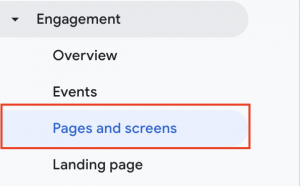
Pull up your most viewed pages via the Pages and screens report under Engagement in GA4 and look at traffic over the last year.
For each page, ask yourself:
- Who is reading this?
- Would they become a client or customer?
- Is this a useful resource answering questions for potential clients or our internal team? Or is it just fluff?
Flag anything that’s off topic or not providing value.
Then, decide whether you want to rewrite it to be more topically relevant, redirect it to an existing page, or remove it altogether.
It’s tempting to be cautious when doing an existing content audit, especially for pages with a lot of views.
However, if the page isn’t topically relevant enough to bring in business or serve as an internal resource for your customer care team, then you need to take action on it.
We completed this exercise for The Media Captain about two years ago and ended up either deleting, redirecting, or rewriting more than half of the blogs on our site.
It was a project that took us over 6 months, but it was well worth it in the end. Once this was completed, we saw a large jump in our rankings during the next algorithm run.
Start With Topical Relevance and Build From There
Topical relevancy is one of the most overlooked parts when devising a content strategy.
The key point to remember is it’s not just what you write about. It’s who you’re writing for, and whether they actually have a chance to become a customer.
Every piece of content is either building trust with the right people or wasting your budget on the wrong ones.
Before pursuing an idea, make it a habit to start with the topical relevance test question: Is this a resource for my team or a potential customer?
Then sit back, and let the customers come to you.
Check out SEO Strategy Done Right: Real Examples From a 15-Year Agency Owner for more actionable ways to win the organic visibility game in your market.