Want to take advantage of an area your competitors are ignoring with their paid advertising strategy?
Try Google’s Local Pack.
According to recent data from Places Scout, around 22% of keywords in Google’s Local Pack are showing advertisements. This might not seem like a large percentage but it’s a massive jump from just a year ago.
We expect this trend to continue, with our own projections forecasting a potential increase of up to 80%(!) by 2027-2028. Our reasoning is that the real estate is too prime for Google not to serve advertisements.
We’ll lean on our 15+ years of marketing experience as a Top 1% Agency to explain why you should capitalize on this paid ads trend and how to set it up properly to ensure optimal success.
What Is Google’s Local Map Pack?
Google’s Local Pack are the map-based results that appear at the top of local searches.
For example, if you’re looking for a restaurant in Columbus, Ohio, and type in “best restaurants columbus ohio”, the first thing you will see on Google’s Search Engine Results Page (SERP) is the Map Pack:
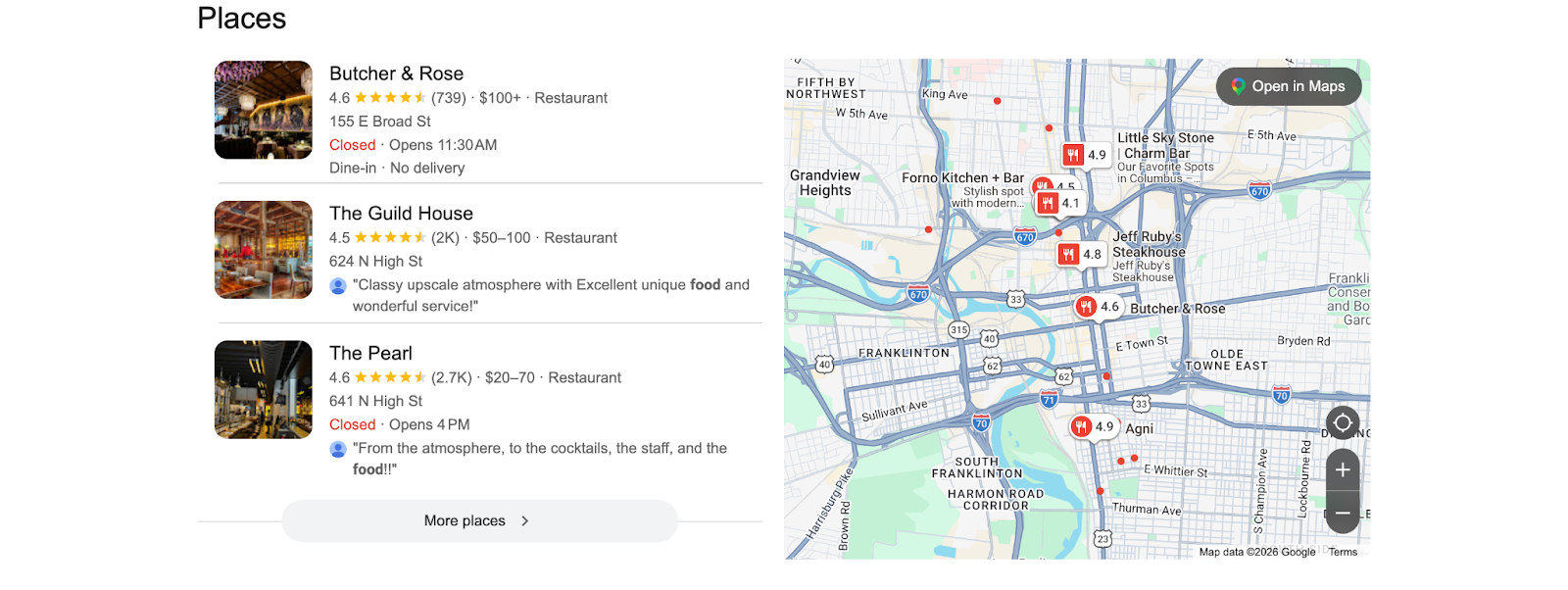
Optimizing for top-3 organic inclusion in the Local Pack for local queries like “near me” searches is one of the primary goals of local SEO campaigns.
As we’re seeing more and more, though, companies are increasingly paying to jump the line and attain sponsored positions ahead of the organic listings:
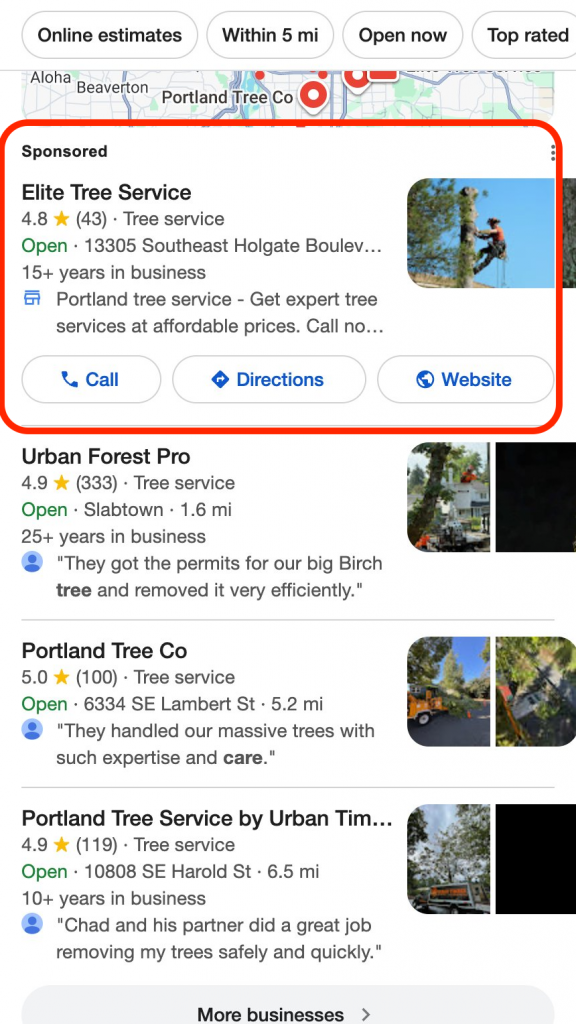
Photo courtesy of Search Engine Roundtable.
Before moving forward, it should be noted that ads in the Local Pack are different than Google Local Service Ads (GLSA, circled below), which appear before the Local Map Pack:
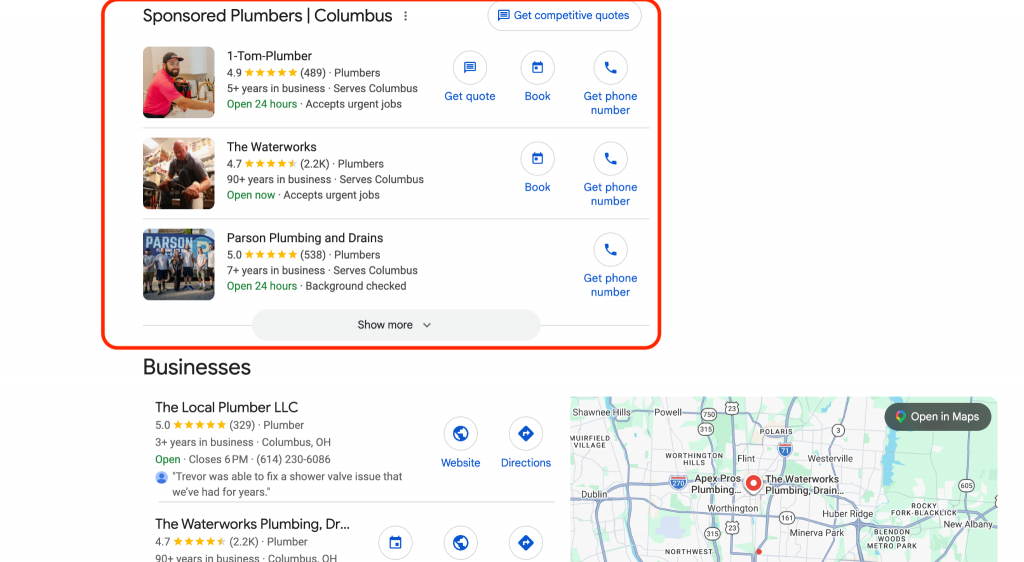
Let’s dive into the emerging trend of Google’s Local Pack advertising more.
The Massive Shift Toward Paid Ads in Google’s Local Pack
In May 2025, less than 1% of paid ads were populating in Google’s Local Pack.
As we mentioned in the introduction, that number is now around 22% and growing.
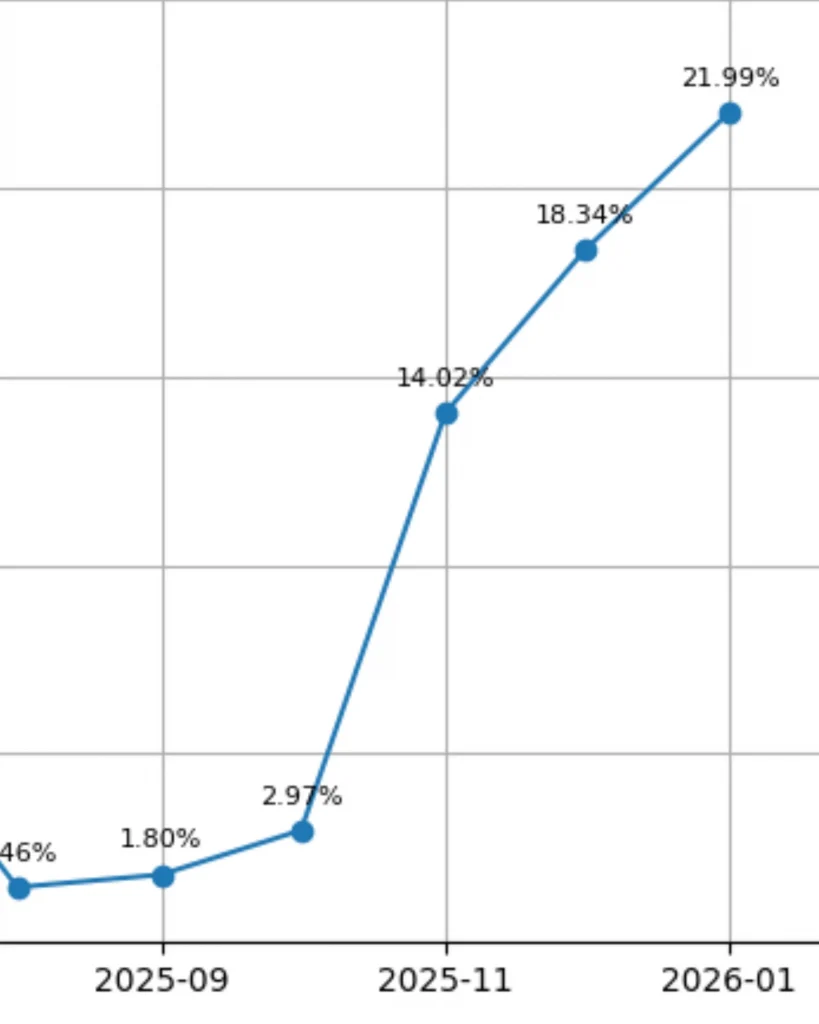
Photo courtesy of PPC Land.
What caused this huge investment shift in Google’s Local Pack?
The reasons are plentiful:
- The Local Pack is the prime real estate on Google’s SERP for local-based queries. It captures 44% of all local clicks on page one of Google.
- It typically appears at the top of the page ahead of all the traditional “blue link” listings.
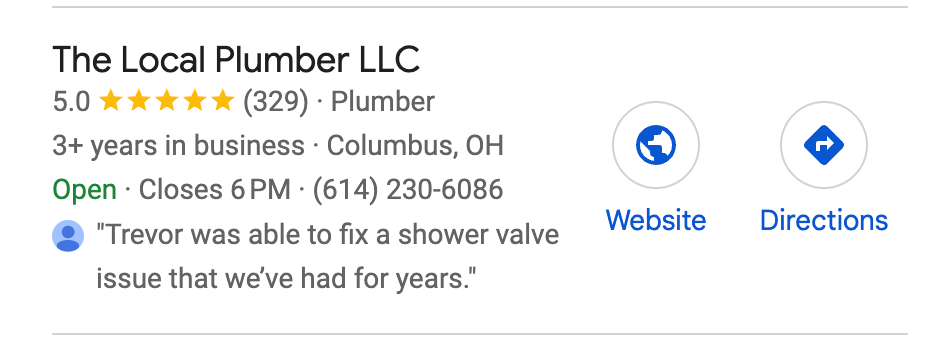
- The Pack displays star ratings and business info like an address, hours of operation and pricing:
Achieving prominence in the Local Pack on Google is arguably the most important local SEO tactic you can master to drive new traffic to your business.
That’s exactly why you must not ignore this trend if you’re a company investing in paid ads.
It might be the difference between a person finding you over a high-ranking competitor in your area.
How to Set Up Ads in Google’s Local Pack
Setting up ads in Google’s Local Pack is very simple. All you need to do is:
- Sync your Google Business Profile to your Google Ads account.
- Turn on location extensions within your ads.
Note: You cannot set up a separate Local Pack campaign. Once you complete the two steps above, your ads are eligible to show in the Local Pack.
So, Just How Prominent Are Ads in Google Local Map Pack?
Instead of telling you that you can jump ahead of your competitors by investing in ads in the Local Pack, let’s show you!
Here are four examples from various industries:
“roof repair near me” – sponsored ads in near me searches populate fairly frequently in competitive areas, based on our internal testing:
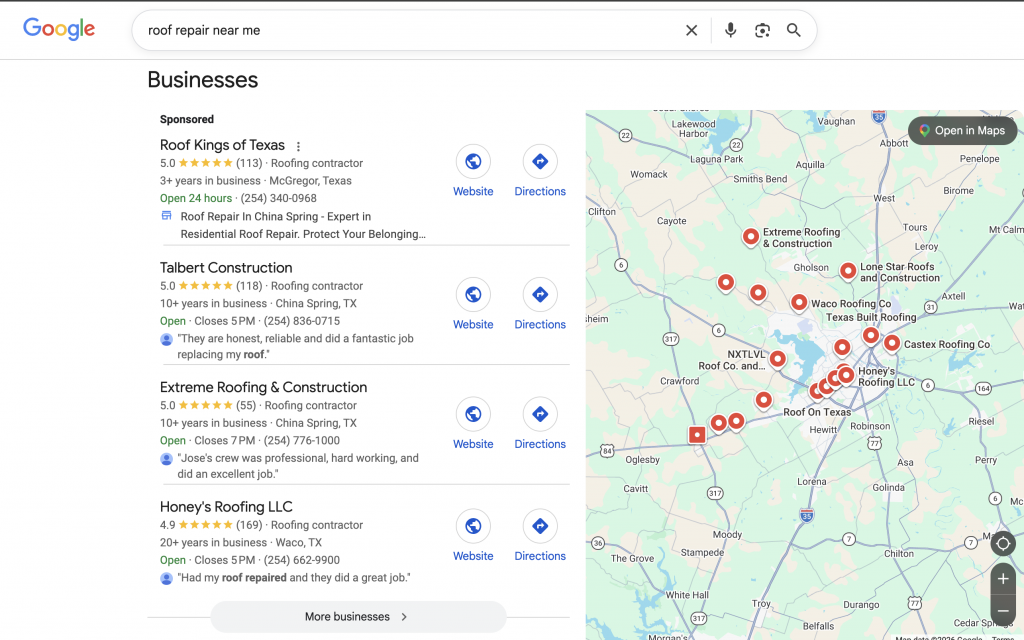
Note: The following three examples appear in the “Places” tab. While this tab differs from the Local Pack results in that ads typically pop up more aggressively, we’re now seeing similar results begin to show in the main Local Pack.
“roof repair Columbus” – note TEGO’s sponsored listing at the top (TEGO is a client of ours):
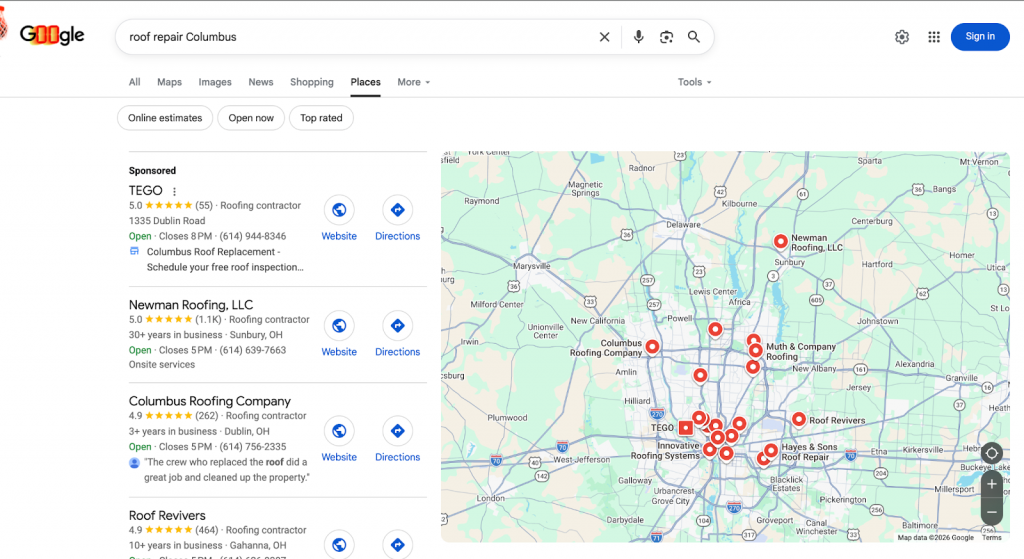
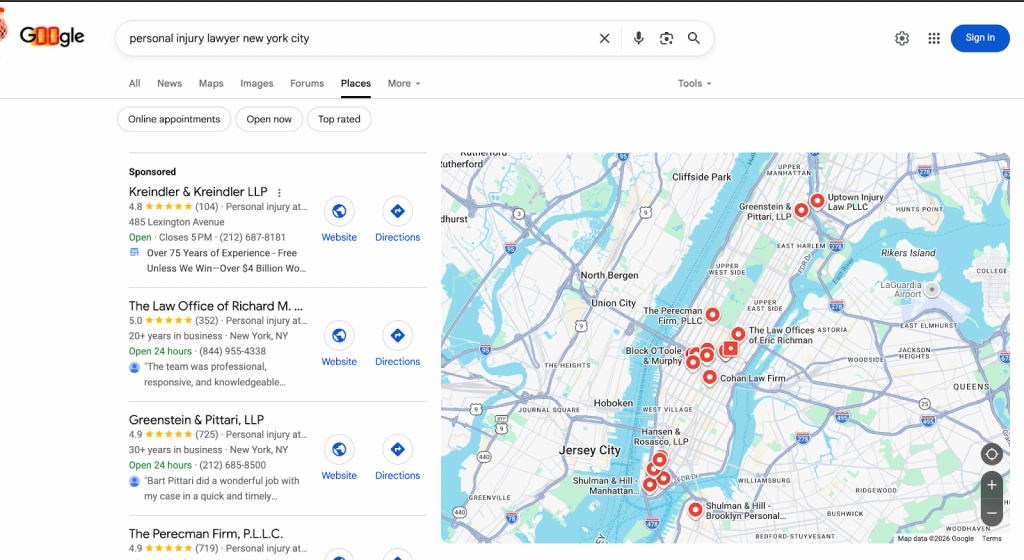
“personal injury lawyer new york city” – note Kreindler & Kreindler LLP sponsored listing at the top, ahead of companies with several more reviews:
“hvac repair los angeles ca” – notice how the top 3 positions are all taken up by paid ads!
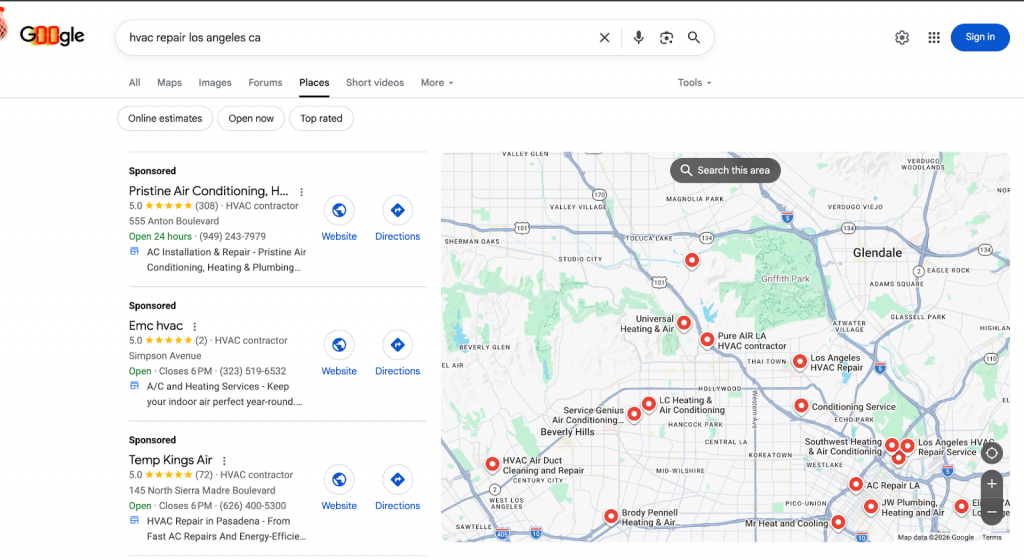
As you saw with the examples in New York City and Los Angeles, the bigger the market, the more likely you are to see ads in Google’s Local Pack.
Tip: Before investing in Local Pack ads, go into an incognito window and search your primary keywords on Google. Study the Local Pack, and answer the following:
- Are there ads showing?
- Are you showing up in the top 3 organically?
If you answered no to both of those, you’re a good candidate to get ahead of the competition and invest in Google Ads in the Local Pack.
In Closing
The purpose of this blog was to highlight the shift toward more ads in Google’s local pack. We also wanted to let you know how easy it is to incorporate this into your PPC strategy.
If you’re looking for a more comprehensive digital marketing strategy, schedule your free strategy call with us today.